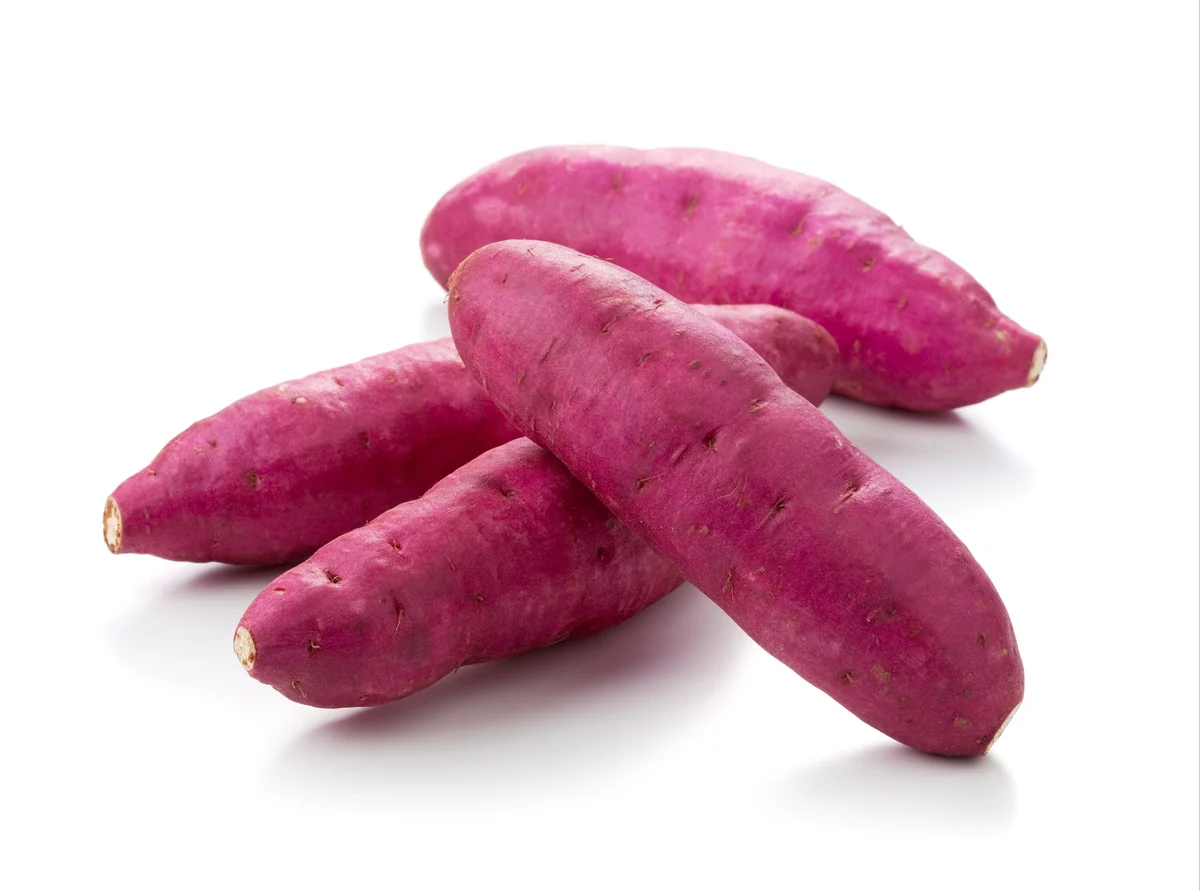
Sweet Potatoes
Premium Egyptian Sweet Potatoes
Savor our premium Egyptian sweet potatoes, known for their naturally sweet flavor, smooth texture, attractive skin colors, and excellent nutritional value. Grown in Egypt’s fertile agricultural regions and carefully harvested, cured, sorted, graded, and packed using appropriate post-harvest techniques, they offer outstanding versatility for retail, wholesale, food service, and food processing.
Available varieties may include Beauregard, Bellevue, Egyptian Baladi, and other Egyptian-grown sweet potatoes, with orange, white, cream, or purple flesh depending on the variety. Product sizes, grades, and packaging are tailored to buyer specifications and confirmed supplier availability.
Request Your Wholesale Quote
Tell us your product requirements, quantity and destination to receive a tailored export quotation.
Description
Premium Egyptian Sweet Potatoes – High-Quality Sweet Potatoes for Export
Egypt is a leading producer and exporter of fresh, high-quality sweet potatoes, known for their naturally sweet flavor, attractive skin colors, smooth texture, and excellent nutritional value. Egyptian sweet potatoes are cultivated using advanced agricultural techniques and carefully processed through harvesting, curing, cleaning, sorting, and grading to ensure their freshness and superior quality. The country’s favorable climate and fertile soil support seasonal production, while appropriate curing and storage allow extended availability, making Egyptian sweet potatoes an attractive choice for importers worldwide.
Why Choose Egyptian Sweet Potatoes?
- Superior taste, natural sweetness, attractive skin colors, and smooth texture
- Grown and handled under appropriate quality control measures
- Product specifications aligned with international export standards for safety and freshness
- Competitive pricing and flexible packaging options
- Available in orange-fleshed, white-fleshed, cream-fleshed, and selected purple varieties
- Reliable supply during the Egyptian sweet potato export season, subject to confirmed availability
Why Source Sweet Potatoes from NILVIDA?
- Premium Export Quality: Carefully harvested, cured, cleaned, sorted, and packed to meet international buyer standards
- Certified Farms: Agricultural production with traceability and international food safety compliance, subject to verified supplier certification
- Efficient Supply Chain: Commercial documentation, customs support, and appropriate temperature-controlled logistics
- Large-Scale Fulfillment: Bulk quantities available according to verified Egyptian production volumes, supplier capacity, and confirmed seasonal availability
Importing Egyptian Sweet Potatoes – Easy and Efficient
Our Egyptian sweet potatoes are exported following agreed quality checks, customized packaging, and reliable shipping arrangements. We coordinate applicable phytosanitary certificates, customs clearance, and compliance with import regulations, subject to confirmed supplier capabilities and destination requirements.
Identity & Commercial
- HS Code:
071420 (Sweet potatoes, fresh, chilled, frozen, or dried).EU CN Codes:- 07142010 – Fresh, whole sweet potatoes intended for human consumption.
- 07142090 – Other sweet potatoes, including specified frozen, dried, or processed forms falling under this subheading.
Final classification depends on the actual product condition, processing, and destination customs requirements.
- Country of Origin:
Egypt. Only sweet potatoes grown and harvested in Egypt, supported by appropriate origin and supplier documentation. - Seasonality:
Egyptian sweet potatoes are generally harvested and exported from July to March, with major commercial volumes typically available from September to December, depending on variety, growing region, weather conditions, and cultivation schedules. Availability outside the main harvest period depends on properly cured and stored Egyptian-grown production, subject to stock confirmation. - Size / Count:Orange-Fleshed Sweet Potatoes:
Beauregard, Bellevue, and other Egyptian-grown orange-fleshed varieties, known for their copper-to-reddish skin, naturally sweet flavor, and moist texture after cooking.White / Cream-Fleshed Sweet Potatoes:
Egyptian Baladi and other suitable varieties, characterized by cream-colored flesh, a comparatively firmer texture, and a mildly sweet flavor.Purple-Skinned Sweet Potatoes:
Selected varieties with reddish-purple to deep-purple skin and white, cream, or other flesh colors depending on the cultivar. Suitable for specialty retail and wholesale markets.Purple-Fleshed Sweet Potatoes:
Specialty varieties characterized by purple flesh and distinctive natural pigmentation, subject to verified Egyptian cultivation and supplier availability.Available Sizes:
- Small (S): Approximately 80–150 g
- Medium (M): Approximately 150–300 g
- Large 1 (L1): Approximately 300–450 g
- Large 2 (L2): Approximately 450–600 g
- Extra Large (XL): Approximately 600–800 g or above
Product Characteristics:
Firm, mature storage roots with smooth skin, characteristic variety color, and appropriate shape and uniformity. Size, weight, flesh color, skin appearance, and grading specifications agreed with the buyer before packing. - Lead Time:
8-12 working days for harvesting, packing and loading after order confirmation and receipt of payment instrument. - Minimum Order:
To be agreed according to variety, available Egyptian production volumes, packaging requirements, and supplier capacity. Full-container orders, mixed loads, or smaller shipments may be considered subject to confirmation. - Grade:
Export quality, Class I / Class II where applicable, with size, weight, shape, skin quality, firmness, cleanliness, and visual characteristics agreed with the buyer before packing according to relevant commercial standards. - Payment Terms:
LC at sight; or TT 70% advance and 30% against scanned shipping documents (balance before release of originals). - Price Basis & Validity:
Indicative prices only; final price to be confirmed according to market, Egyptian harvest availability, variety, size, grade, curing requirements, packaging specification, and destination, and fixed only in the formal offer/proforma invoice. - Post-Harvest Treatments:
Harvesting, soil removal, curing, cleaning, washing (where appropriate), drying of surface moisture, sorting, grading, and packing. Curing may be performed under controlled temperature and humidity conditions to promote healing of minor skin injuries and improve storage performance. Any post-harvest treatments must comply with applicable food safety requirements and destination regulations.
Packaging & Logistics
- Unit Net Mass:
Typical options: 3 kg, 5 kg, 6 kg, or 10 kg net per carton; 10–25 kg mesh bags or suitable bulk packaging may be available depending on product grade, market requirements, and supplier capabilities. - Estimated Net Weight per Container:
Approximately 20–24 MT net per 40′ reefer container as an indicative commercial range, depending on variety, packaging, palletization, container payload limits, and loading configuration. Final container loading weight is confirmed in the formal quotation and loading plan. - Primary Packaging:
New food-grade ventilated corrugated cartons, plastic crates, mesh bags, or suitable bulk containers. Typical export configurations include 5–6 kg cartons for European retail and wholesale distribution, with larger packaging formats available according to buyer requirements. - Unit Gross Mass:
Net weight plus the actual weight of cartons, crates, bags, pallets, and other packing materials (varies by packaging configuration). - Pre-Cooling / Pre-Shipment Storage:
Sweet potatoes require appropriate curing and temperature-controlled handling to maintain quality and minimize post-harvest deterioration. Recommended commercial storage and transportation temperatures are generally around 13–15°C, with suitable relative humidity and ventilation.Sweet potatoes are sensitive to chilling injury and must not be exposed to excessively low refrigeration temperatures. Unlike conventional potatoes, they should not automatically be transported at 0–5°C.Carrying conditions are established according to variety, curing status, packaging, transit duration, and destination requirements, with protection against moisture accumulation, mechanical damage, excessive heat, and temperature fluctuations maintained.
- Ports of Loading (POL):
Main Egyptian export ports: Alexandria, Damietta, Port Said and Sokhna (port selection depends on schedule and destination). Air freight through Cairo International Airport may also be arranged for suitable shipments, subject to availability and agreement.
Quality & Docs
- Grade Basis:
Based on botanical identity, variety, root size, weight, shape, skin color, flesh color, firmness, maturity, cleanliness, uniformity, and external appearance. Additional product-specific parameters may include dry matter content, sugar content, skin integrity, curing condition, mechanical damage, and relevant food safety characteristics according to product and destination market. - Defect Tolerances:
Final tolerances to be agreed per contract and applicable commercial grade standards, including UNECE FFV-66 where adopted by the parties. Limits for cuts, bruises, cracks, skin damage, deformities, discoloration, sprouting, and other defects must be confirmed before shipment. Products must comply with applicable requirements concerning decay, pest damage, contamination, and other relevant quality parameters. - MRL Compliance:
Egyptian sweet potatoes sourced to comply with applicable EU and GCC food safety requirements, including relevant pesticide residue limits, contaminant standards, and applicable phytosanitary regulations. Laboratory analyses for pesticide residues and other required parameters may be provided or arranged according to buyer requirements and supplier confirmation. - Traceability:
Full traceability from Egyptian agricultural source through harvesting, curing, sorting, grading, packing facility, and container loading, using lot numbers and carton/crate coding. - Certifications:
Official Phytosanitary Certificate and quality/health inspection documentation where required; additional private certifications (GLOBALG.A.P., Organic, ISO, HACCP, BRCGS etc.) available only where supported by valid supplier certification and applicable to the specific product and lot. - Shipping Marks:
As per buyer artwork and instructions (brand, product name, botanical name, variety, size, grade, crop year, Egyptian origin, packing date, batch number, net weight, barcodes, and handling marks). - Shipping Documents:
Commercial Invoice, Packing List, Phytosanitary Certificate (where required), Certificate of Origin, Bill of Lading or Air Waybill, and applicable quality or laboratory analysis certificates; any additional documents required by the destination can be arranged by prior agreement.